Most Inspirational Leader Shaping the Future of Music Education – 2026
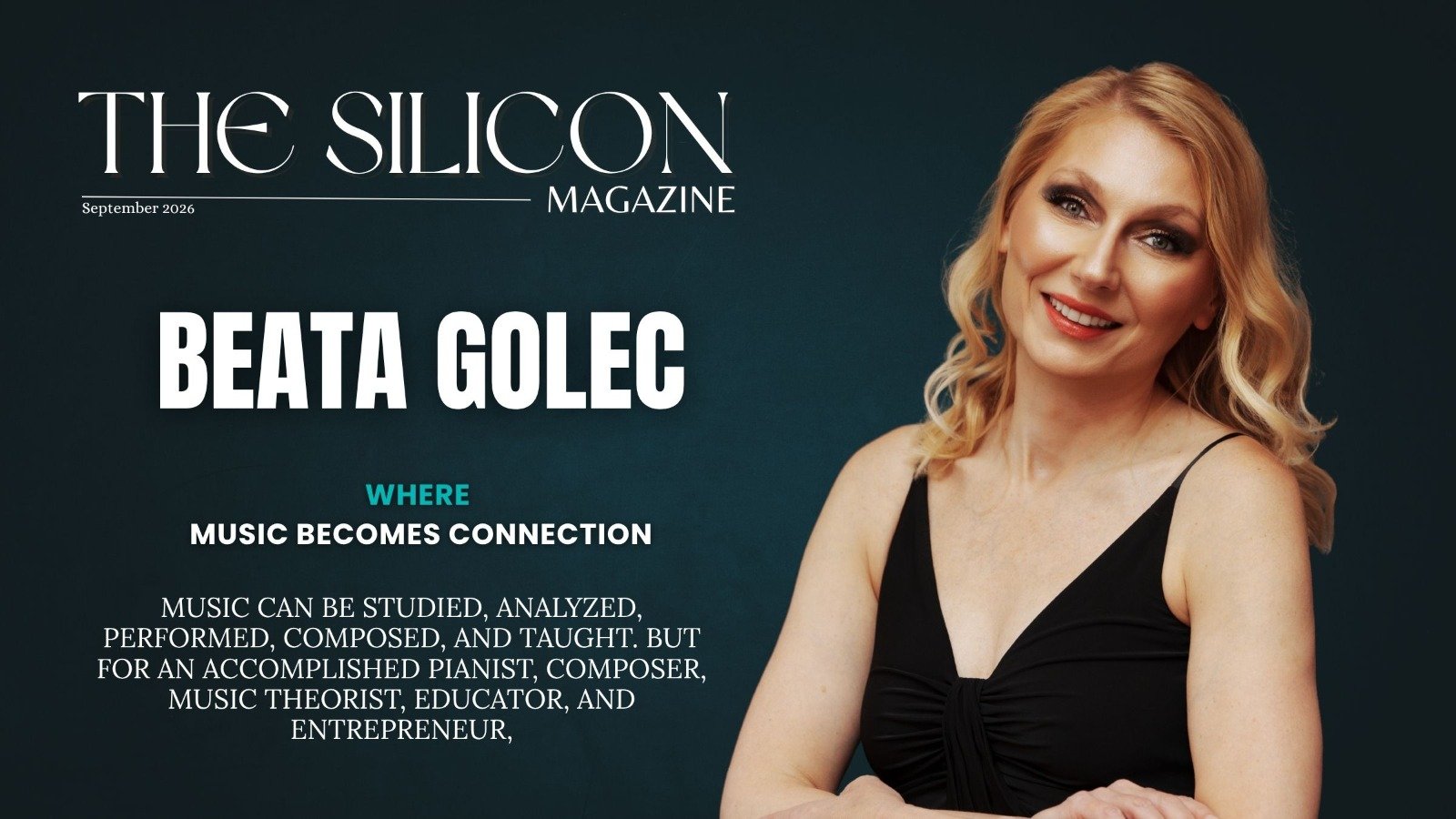
Where Music Becomes Connection: The Vision and Legacy of Golec Music Studio
Where Music Becomes Connection: The Vision and Legacy of Golec Music Studio
Music can be studied, analyzed, performed, composed, and taught. But for an accomplished pianist, composer, music theorist, educator, and entrepreneur, music is something even more fundamental: a language of connection.
At the heart of Golec Music Studio is a belief that music becomes truly meaningful when it is shared. Founded with a mission to inspire and nurture the next generation of artists, the studio has developed an educational philosophy that reaches far beyond notes, scales, examinations, and performances. It is a place where students are encouraged to grow without being judged, where creativity is treated as something to be nurtured, and where music education becomes a pathway toward confidence, discipline, empathy, and belonging.
The founder brings an unusual breadth of experience to this mission. With master's and doctoral degrees from the Eastman School of Music, teaching experience at the State University of New York and Rochester Institute of Technology, and professional responsibilities that include serving on boards of examiners for Advanced Placement Music Theory and International Baccalaureate Music, the foundation is academically rigorous. Yet the philosophy of Golec Music Studio is deeply human.
The studio's story is therefore not simply about teaching music. It is about creating an environment in which people can discover their capabilities, express their individuality, and understand that artistic development is inseparable from human development.
A Different Philosophy of Music Education
Traditional music education can sometimes place heavy emphasis on performance, grades, competitions, and technical achievement. Golec Music Studio approaches the student differently.
The founder's philosophy is clear: a student should not be judged by a first encounter. "Judgement and education do not go together." Instead, the emphasis is placed on growth, safety, empathy, and understanding. Behavioral struggles are separated from a student's worth, allowing educators to respond to the individual rather than defining that individual by a difficulty or perceived limitation.
This distinction is important because every learner arrives with a different history, personality, set of abilities, goals, and challenges. Rather than forcing students into predefined categories, Golec Music Studio recognizes that each individual has a unique learning path.
The studio serves students across different ages and skill levels, offering piano and voice instruction alongside music theory and composition. Its academic offerings include preparation for Advanced Placement and International Baccalaureate examinations, while its broader services extend to college and music theater auditions, competitions, recordings, transcriptions, and musical experiences for weddings, celebrations of life, charity events, and corporate occasions.
This range reflects a central idea: music education does not have to follow one predetermined route. One student may want to develop as a performer, another may be preparing for university, another may be exploring composition, while someone else may simply want to discover the joy of making music.
The educator's role, therefore, is not to force every student toward the same destination. It is to understand where the student wants to go and help build a meaningful path toward it.
Education Built Around the Individual
Working with children, adults, and students with learning disabilities has reinforced the founder's belief that individual needs must remain at the center of effective education.
Every learner has a unique path, and attempting to place people into rigid categories can reduce complex individuals to stereotypes or labels. At Golec Music Studio, this people-first philosophy extends beyond teaching methodology into business strategy itself. Organizational decisions are centered on human needs rather than immediate returns on investment. The well-being, growth, and satisfaction of students and clients remain central to decision-making.
That approach also shapes the relationship between teacher and student.
Rather than functioning as an intimidating authority figure, the educator acts as a guide. Lessons become conversations. Students are encouraged to ask questions, share ideas, and participate actively in their own development. Empathetic teaching is built around two-way communication, emotional support, and active listening rather than one-directional lecturing.
The result is an environment where students can feel safe enough to experiment.
That sense of safety matters particularly in music. Performing can make people vulnerable. A mistake is audible. A creative idea can feel personal. Standing before an audience requires courage. When students believe that their teacher is there to support them rather than simply evaluate them, they can approach performance as an opportunity for expression rather than an exercise in fear.
This philosophy has also been shaped by the founder's own experiences as a student. Earlier recitals, degree performances, and juries could feel harshly judged, experiences that informed a desire to create a different environment for today's students. Playing duets with students, for example, gives them courage and reinforces the message that they are not performing alone.
Music as the Ultimate Connector
For Golec Music Studio, the value of music extends well beyond artistic achievement.
The founder describes music as "the most powerful and accessible language." It is not simply a profession but a lifelong passion, something to be felt, analyzed, taught, and shared. Sharing is particularly important because music cannot fully exist as a human experience without communication between people.
This belief influences the way students are taught.
Learning music means learning much more than the notes written on a page. Students explore the history, culture, traditions, circumstances, inspirations, and emotions surrounding a composer and a work. Music theory, history, and analysis become tools that help students develop investigative and critical-thinking abilities, ultimately allowing them to become more independent and confident musicians.
In this model, technical proficiency is only one part of musicianship.
A performer who understands the historical and emotional context of a composition can approach it with greater depth. A composer who understands structure and tradition can make more informed creative choices. A student who learns to investigate music critically develops intellectual habits that extend beyond the studio.
Music becomes both an art and a form of inquiry.
The Cognitive and Emotional Dimensions of Music
The studio's philosophy also recognizes music as an experience involving the whole person.
Music learning and music-making are described as powerful forms of mental stimulation. According to the founder, music activates auditory, visual, and motor cortices while promoting coordination, critical thinking, and memory. The long-term benefits are also viewed in terms of motivation, mood, neuroplasticity, and cognitive reserve.
Yet perhaps the most important dimension is social.
In a world increasingly shaped by digital communication and unrealistic expectations of perfection, people can experience anxiety, loneliness, and disconnection. Genuine music-making provides an opportunity for people to gather, listen, respond, cooperate, and create something together.
The founder sees music as capable of soothing, healing, and creating human connections. The need to belong is universal, and making music together can support emotional health and balance. For this reason, music education and composition should remain accessible regardless of age or ability.
This perspective changes the meaning of a music lesson. It is not merely a scheduled hour devoted to technical instruction. It can become a place where students discover confidence, communicate emotions, develop relationships, and learn to participate in something larger than themselves.
Continuity Beyond the School Calendar
Golec Music Studio operates throughout the year, including school breaks.
That decision reflects another important educational principle: continuity matters.
Winter and summer breaks can provide valuable opportunities to advance skills, reinforce knowledge, and remain engaged with music. Rather than allowing months of interruption to erode progress, students can use these periods to strengthen abilities, target specific areas of knowledge, and prepare for the next academic year.
The studio's accessibility extends to students with learning disabilities as well. Golec Music Studio is an approved vendor for the New York State Department of Education and Heritage Christian Services to provide lessons to students with learning disabilities.
This reinforces the studio's broader commitment to inclusion: music should not be reserved for one particular type of learner.
Creating a Stage Without Fear
Perhaps nowhere is the studio's educational philosophy more visible than through Young Musicians' Concerts.
Founded in 2016, the twice-yearly charity concerts serve multiple purposes. They provide students with positive and relatively stress-free performance experiences while raising funds for food pantries at Holy Cross and Our Mother of Sorrows Churches in Rochester, New York.
The format deliberately removes some of the pressures traditionally associated with recitals.
Students do not have to memorize their music, and the performance order is not predetermined. There are no printed programs. The founder generally begins each recital with an original composition, demonstrating the willingness to participate alongside the students, before inviting musicians to perform. Students introduce themselves and announce the selections they are about to play or sing.
Families participate too.
Parents and children can perform together, creating an environment in which artistic participation becomes a shared family experience. This helps build confidence and enjoyment among younger performers while demonstrating that music is not restricted to a particular age group or level of expertise.
The concerts also have a strong community mission. Funds are raised for local food pantries, and families are encouraged to shop together for non-perishable food items to donate. Children learn about the difference between perishable and non-perishable foods while discovering the meaning of providing a meal for another family.
In this way, a music recital becomes something larger than a recital.
It becomes a lesson in generosity.
Business with a Human Purpose
Golec Music Studio is a one-person business. There are no employees, but the founder works with volunteers, nonprofit organizations supporting students with disabilities, and local leaders who share common fundraising goals.
This model reflects a distinctive entrepreneurial philosophy.
Running a small business requires the ability to perform many roles simultaneously. The founder describes the experience of being a CEO, finance manager, marketer, scheduler, and customer-support representative—all within one person. While the responsibilities bring sacrifice and heightened awareness of community needs, they also bring the satisfaction of building something from the ground up.
For Golec Music Studio, entrepreneurship is not simply about financial growth.
It is about autonomy, service, relationships, and the opportunity to shape an organization according to a clear set of values.
The founder is also a strong supporter of small local businesses and emphasizes long-term relationships with clients. The same direct relationship between business owner and customer that the founder values personally has become part of the studio's own operating philosophy. Quality, consistency, responsiveness, and trust remain priorities.
This approach is reflected in the studio's client relationships. Long-term retention and recommendations are viewed as evidence of a culture based on loyalty and trust rather than transactions. Students, clients, and collaborators are treated as relationships to be cultivated, not numbers to be processed.
Leading by Example
The founder's leadership philosophy can be summarized in a simple principle: walk the walk.
Rather than simply telling young musicians to be creative, confident, collaborative, and generous, the founder seeks to demonstrate those qualities through personal participation and community initiatives.
Young Musicians' Concerts are an important expression of that approach. Beginning performances with original compositions provides students with a model of creative ownership. Encouraging them to introduce themselves and their music places responsibility and confidence in their hands.
The larger objective is to create a sense of belonging and meaning among young musicians. Students should be proud of their work, recognize their own creativity, and feel confident presenting their inventions to others.
That is a powerful educational message.
The goal is not simply to produce technically proficient performers. It is to develop people who understand that their creative voices matter.
Excellence, Ethics, and Recognition
The quality of this work has received significant recognition.
The founder earned master's and doctoral degrees from the Eastman School of Music and received the SUNY Chancellor's Award for Excellence in Teaching in 2020. Further recognition followed with the Victor Business Award and an honoree distinction from the Ontario County ATHENA Leadership Awards in 2024. In 2025, the founder sponsored the "Unmasking the Silence" Masquerade Ball for Suicide and Mental Health Awareness and the 40th Ontario County ATHENA Leadership Awards.
More recently, the founder was a finalist for the 2026 ROC the City Choice Awards in Best Professional Services and received the 2026 Better Business Bureau Torch Award for Ethics. The profile also notes recognition through the 2026 Trusted Business Award, International Association for Business Excellence Award, and Global Recognition Award.
These distinctions represent more than professional milestones.
For the founder, they validate a commitment to quality, ethical standards, customer care, and community service. The recognition from the Better Business Bureau in particular is deeply meaningful because it reflects the importance placed on ethical leadership and steadfast commitment to customers and the community.
The underlying philosophy is equally straightforward: talent alone is insufficient.
Natural ability may provide a head start, but hard work, discipline, healthy habits, study, and daily practice transform potential into meaningful and lasting achievement. Success in music and business alike requires persistence and continuous effort.
Resilience in the Face of Barriers
The founder's journey also reflects the realities women can encounter in professional and entrepreneurial environments.
Women leaders and entrepreneurs may face systemic bias, discrimination, gender stereotypes, unequal pay, inadequate support, and the motherhood penalty. There is also what the founder describes as a "double bind": women are often expected to demonstrate competence and authority while simultaneously conforming to traditional expectations of being agreeable, approachable, and submissive.
The contradiction can be difficult to navigate. Assertiveness in women may be interpreted negatively even when the same characteristic is associated with effectiveness in male leaders.
The response to these challenges is not to internalize the negativity.
Instead, the founder emphasizes the importance of learning to distinguish other people's behavior from one's own self-worth, establishing boundaries, remaining neutral when appropriate, and concentrating on constructive feedback and relationships that encourage growth.
This is a leadership lesson with relevance far beyond music.
Professional journeys inevitably include criticism, doubt, rejection, and people who underestimate what others can accomplish. Sustainable leadership requires the ability to determine which feedback deserves attention, and which should simply be left behind.
Preserving the Human Element in a Digital Future
Technology is changing education, including music education.
Digital platforms can provide valuable resources for ear training, basic analysis, and supplementary learning. But Golec Music Studio's philosophy maintains that technology cannot fully replace human connection, emotional intelligence, spontaneity, and the adaptability of a skilled educator.
An effective teacher does much more than deliver information. Educators adjust the pace of instruction, explain concepts in multiple ways, demonstrate and create spontaneously, monitor progress, communicate beyond class time, and advocate for students' needs. They also contribute to safe learning environments and can notice changes in students' emotional and behavioral states.
This does not mean rejecting technology.
Instead, it means understanding its proper role.
Digital resources can supplement education, but human educators remain essential because learning is relational. A screen can provide information; a teacher can interpret confusion, recognize hesitation, respond to emotion, change an explanation in real time, and inspire confidence.
For a studio built around empathy and connection, that distinction is fundamental.
A Legacy Measured in People
The most compelling aspect of Golec Music Studio may ultimately be that its success is not measured only in awards, examinations, performances, or academic outcomes.
Its deeper measure is human impact.
A student who once feared performing may discover confidence. A young musician may find a creative voice. A student with learning differences may discover that a conventional label does not define their potential. A family may find a new way to connect. A community member may receive support through a charitable initiative. A performer may learn that music can be used not only to achieve but also to give.
The studio's philosophy creates a chain reaction: education develops confidence; confidence encourages creativity; creativity creates expression; expression builds connection; and connection strengthens community.
That cycle is visible in the studio's teaching, concerts, business practices, and charitable work.
It is also why the founder sees music as something that must be shared.
The Future: More Than a Music Studio
Looking ahead, the larger vision for Golec Music Studio is grounded in the same principles that have shaped its development: excellence, inclusion, empathy, creativity, and community.
The studio's purpose is not simply to produce musicians who can play difficult pieces. It is to inspire and nurture artists who understand the value of their own voices and recognize their ability to contribute to the world around them.
That mission begins with something deceptively simple: listening.
Listening to a student.
Listening to a piece of music.
Listening to the story behind a composition.
Listening to a community's needs.
And listening closely enough to understand that every person has a different path.
In an era when education can become increasingly standardized and digital communication can sometimes replace genuine human interaction, Golec Music Studio offers a different proposition. It argues that education should remain personal, that creativity should be protected, and that music should continue to bring people together.
The founder's professional journey, from pianist and composer to educator, theorist, entrepreneur, community supporter, and award-winning studio owner, demonstrates what can happen when expertise is combined with purpose.
The lesson is not that every student must become a professional musician.
The lesson is that every student deserves the opportunity to discover what they can become.
And perhaps that is the enduring power of music: it does not ask us to be identical. It gives us a language through which we can understand ourselves, appreciate others, and create something together.
For Golec Music Studio, that is not simply an educational philosophy.
It is a lifelong mission.