Most Inspirational Leaders Transforming Adversity into Success – 2026
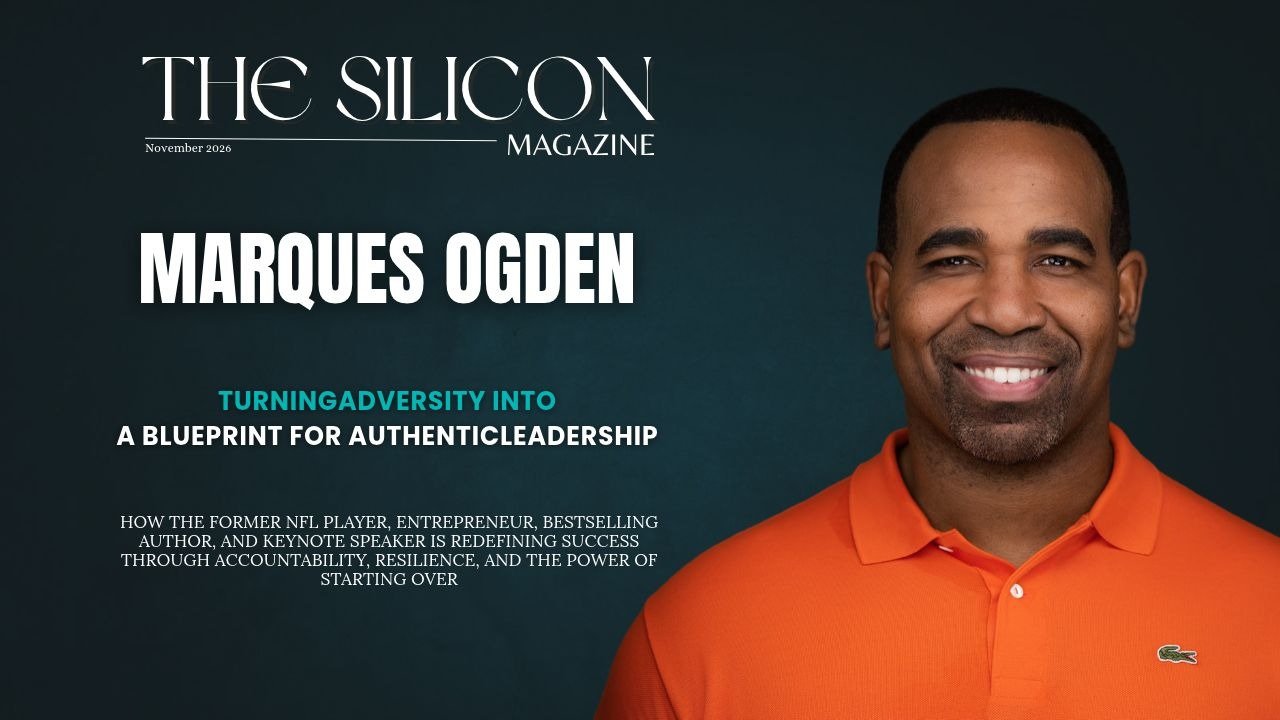
Marques Ogden: Turning Adversity into a Blueprint for Authentic Leadership
Beyond Success: A Journey Defined by Resilience
Success is often measured by visible achievements: professional recognition, financial prosperity, influential relationships, and the ability to build something that commands respect. Yet, the most meaningful lessons about leadership frequently emerge when those achievements disappear. For Marques Ogden, Founder and CEO of Ogden Ventures LLC, the journey from professional football to entrepreneurial success, devastating financial loss, and professional reinvention has provided a powerful understanding of what it truly means to succeed.
A former NFL player, keynote speaker, entrepreneur, five-time bestselling author, and podcast host, Ogden has built a career around sharing lessons that extend far beyond conventional motivational messaging. His story is one of ambition, achievement, adversity, and the determination to rebuild with greater self-awareness. Having experienced the excitement of professional sports and the challenges of losing a multimillion-dollar business, he understands that success is not simply about reaching the top. It is also about developing the character, judgment, and resilience required to navigate life when circumstances change.
Today, through Ogden Ventures LLC, Ogden helps individuals and organizations strengthen leadership, improve performance, build accountable teams, and navigate uncertainty. His approach combines personal storytelling with practical leadership principles, encouraging people to confront difficult realities, learn from their decisions, and take purposeful action.
At the center of his philosophy is a straightforward principle: own it, fix it, and move forward. This idea reflects the lessons he learned through his own experiences and has become a foundation for the message he shares with executives, entrepreneurs, and emerging leaders.
From the NFL to the World of Entrepreneurship
Ogden’s professional journey began with a passion for football, a commitment to hard work, and an ambition to build a meaningful life. His opportunity to play in the National Football League introduced him to an environment where preparation, discipline, teamwork, and accountability were essential. Representing teams including the Baltimore Ravens, Buffalo Bills, Tennessee Titans, and Jacksonville Jaguars, he experienced the demands of competing at the highest level of professional football.
The NFL provided more than athletic experience. It taught him the importance of understanding individual responsibilities, trusting teammates, preparing consistently, and performing under pressure. These principles would later influence his approach to entrepreneurship and leadership development.
When his professional football career ended, Ogden recognized an opportunity to apply the same competitive mindset to business. At just 27, he entered the construction industry and founded Kayden Premier Enterprises. Through hard work, strategic relationships, and a commitment to delivering results, he developed the company into a multimillion-dollar business.
His entrepreneurial achievements included working alongside established construction organizations such as Turner Construction and Harkins Builders. He was also recognized as Maryland Minority Contractor of the Year, reflecting his accomplishments during that phase of his career.
From the outside, his journey appeared to represent the American dream: a professional athlete transitioning successfully into business, building a substantial enterprise, and reaching financial milestones that many entrepreneurs pursue. Yet, behind those achievements lay a lesson that would fundamentally change his understanding of leadership, identity, and success.
The experience demonstrated that professional accomplishments, however impressive, cannot eliminate uncertainty. Business growth must be accompanied by sound judgment, careful decision-making, humility, and the willingness to recognize when something needs to change.
For Ogden, that realization would become especially significant when his entrepreneurial journey took an unexpected turn.
When Everything Changes: The Lessons of Business Failure
One of the defining chapters of Ogden’s life came when he lost nearly $2 million in approximately 90 days. His business collapsed, he experienced bankruptcy, and the professional and financial stability he had worked so hard to establish disappeared.
The consequences extended beyond financial loss. Ogden had invested considerable effort in building his business and had associated much of his identity with his achievements. Losing the enterprise forced him to confront difficult questions about who he was beyond his professional title, financial position, and outward signs of success.
Eventually, he found himself working as a custodian, earning $8.25 an hour. For someone who had played professional football and built a multimillion-dollar company, the experience was deeply humbling.
However, this chapter became a turning point rather than the end of his story.
The experience challenged him to examine his decisions, reevaluate his priorities, and recognize that personal worth cannot be determined by income, professional status, or the size of a business. It also reinforced the dignity of honest work and the importance of taking responsibility when circumstances become difficult.
Ogden’s reflections on failure are particularly relevant to entrepreneurs and executives, who often operate in environments where confidence and ambition are celebrated. Although these qualities can help leaders pursue opportunities, they must be balanced with self-awareness, preparation, and sound judgment.
Previous achievements do not guarantee future success. Leaders must remain willing to question their assumptions, recognize warning signs, seek advice, and acknowledge mistakes before they become more consequential.
His experience also reshaped his understanding of resilience. Resilience does not mean pretending that failure is painless or that every setback can be overcome through optimism alone. It means facing reality honestly, identifying the lessons available, and taking the next responsible step.
Through this process, Ogden began rebuilding his professional life around speaking, leadership development, business consulting, and helping others navigate adversity. His experience became the foundation for a new purpose: transforming the lessons of personal and professional difficulty into practical guidance for others.
The Bison Mindset: Accountability in Action
A central element of Ogden’s philosophy is what he calls the Bison Mindset. Rooted in accountability, resilience, and purposeful action, the concept encourages individuals to take responsibility for their present circumstances while remaining committed to building a better future.
For Ogden, accountability is not about assigning blame or dwelling on past mistakes. It is about honestly evaluating decisions, understanding their consequences, and identifying what must change.
The principle is particularly important in leadership because organizations frequently encounter challenges that require difficult conversations and decisive action. Problems can become more complicated when individuals avoid responsibility, conceal mistakes, or focus exclusively on factors beyond their control.
Ogden encourages leaders to adopt a different approach. Rather than allowing setbacks to become excuses for inaction, they can use difficult experiences to identify weaknesses, strengthen decision-making, and establish more effective habits.
The Bison Mindset also emphasizes that responsibility and ambition should work together. Recognizing where one stands today does not mean abandoning future aspirations. Instead, it creates a realistic foundation from which meaningful progress can begin.
This philosophy applies across professional and personal settings. An entrepreneur rebuilding a company, an executive managing organizational change, or an individual navigating a career transition may face very different circumstances. Yet, each can benefit from the willingness to acknowledge reality, learn continuously, and act with intention.
For Ogden, the message is ultimately about empowerment. People cannot always control what happens to them, but they can influence how they respond. By accepting responsibility for their decisions and focusing on the actions within their control, they can begin creating a more constructive path forward.
Redefining Leadership Through Authenticity
Ogden’s leadership philosophy is built around authenticity, accountability, resilience, communication, and trust. He believes that effective leadership begins with a willingness to accept responsibility for decisions and recognize their impact on other people.
His own entrepreneurial setbacks taught him that leadership cannot be sustained by ego alone. Confidence is valuable, but without self-awareness, it can prevent individuals from recognizing risks or acknowledging when a different approach is needed.
Authentic leadership requires honesty, especially when the truth is uncomfortable. Leaders must communicate expectations clearly, listen to their teams, and ensure that employees understand both their responsibilities and the purpose behind their work.
Ogden also emphasizes the importance of constructive accountability. Holding people accountable should not involve humiliating them or creating an atmosphere in which employees are afraid to make decisions. Instead, it should involve establishing clear expectations, addressing problems directly, offering opportunities for improvement, and helping individuals understand how their contributions support broader organizational objectives.
His experience in professional football provides a useful parallel. A successful team requires talented individuals who understand their roles, trust one another, and prepare consistently. Individual ability matters, but talent alone cannot compensate for poor communication, insufficient preparation, or a lack of shared responsibility.
The same principles apply in business. Organizations perform more effectively when people understand their objectives, communicate openly, and recognize that results depend on collective effort.
Ogden aims to demonstrate these principles through both his message and his example. By discussing his failures alongside his achievements, he challenges the assumption that credible leaders must appear perfect. In his view, credibility grows when individuals acknowledge their shortcomings, learn from experience, and demonstrate a genuine commitment to improvement.
This perspective creates room for a more practical and human approach to leadership, one in which vulnerability and accountability can coexist with confidence and ambition.
Ogden Ventures LLC: Building Stronger Leaders and Teams
As Founder and CEO of Ogden Ventures LLC, Ogden focuses on helping individuals and organizations develop stronger leadership capabilities, improve performance, and navigate challenges with greater resilience.
His work addresses the connection between leadership behavior, workplace culture, team performance, and sustainable business success. Through keynote presentations, leadership-focused engagements, and business consulting, he shares insights drawn from his experiences as a former NFL player, entrepreneur, business owner, and professional speaker.
The challenges he addresses are relevant across industries. Organizations must communicate effectively during periods of change, maintain trust among employees, establish accountability, and ensure that teams understand what is expected of them. Leaders must also make decisions under pressure while balancing immediate operational requirements with longer-term goals.
Ogden’s approach combines real-life storytelling with actionable ideas. Rather than relying exclusively on inspirational messages, he encourages audiences to consider how leadership principles can be translated into daily decisions, workplace behaviors, and consistent practices.
For example, accountability becomes meaningful when expectations are clearly communicated and individuals understand how their responsibilities contribute to a shared objective. Resilience becomes practical when teams learn to respond constructively to setbacks, evaluate what went wrong, and identify improvements. Authenticity becomes valuable when leaders communicate honestly and demonstrate a willingness to learn.
These principles also influence workplace culture. When leaders model accountability and openness, they help establish expectations that extend beyond formal policies. Their behavior demonstrates whether employees can raise concerns, share ideas, and acknowledge problems without automatically fearing criticism.
Ogden believes leaders must embody the standards they expect from others. If they want employees to communicate honestly, they must be willing to listen. If they expect accountability, they must accept responsibility for their own decisions. If they encourage innovation, they must remain open to questioning their assumptions.
Through Ogden Ventures, his broader mission is to help organizations build environments in which people are equipped not only to achieve results but also to sustain them through stronger relationships, better decisions, and a clearer sense of purpose.
Innovation, Adaptability, and the Changing Business Landscape
In an evolving business environment, adaptability has become an important leadership capability. Ogden believes that leaders cannot assume the strategies that worked five or ten years ago will continue producing the same results.
His approach begins with humility and curiosity. Remaining effective requires listening to colleagues, learning from different industries, and understanding how customer expectations, technology, workplace culture, and leadership practices are changing.
His speaking and consulting work provides opportunities to engage with professionals across technology, finance, insurance, healthcare, manufacturing, and professional services. These conversations offer perspectives on the challenges organizations face and reinforce the importance of remaining open to new ideas.
Ogden also encourages leaders to distinguish between adopting a trend and implementing a meaningful improvement. Emerging technologies, including artificial intelligence and data-driven tools, can create opportunities, but introducing new technology does not automatically resolve an organizational problem.
Leaders must first understand the objective, determine how a proposed solution supports it, and establish how success will be measured. They should ask whether an initiative improves decision-making, enables people to work more effectively, creates value for customers, and can be implemented responsibly.
This emphasis on purposeful innovation reflects his wider leadership philosophy. Creativity matters, but it becomes more valuable when connected to a clear objective and a commitment to execution.
Ogden believes innovation also depends on organizational culture. Employees should feel comfortable sharing ideas, asking questions, and identifying inefficiencies. Not every experiment will succeed, but organizations can learn from unsuccessful approaches when they evaluate outcomes honestly and make informed adjustments.
For leaders, adaptability therefore involves more than keeping pace with new developments. It requires the willingness to challenge established practices, listen to different perspectives, and change direction when evidence suggests a better approach.
Relationships, Collaboration, and the Power of Trust
Relationships have played an important role throughout Ogden’s professional journey. From professional football to construction entrepreneurship and leadership development, his experiences have reinforced the importance of collaboration.
During his construction career, working alongside organizations such as Turner Construction and Harkins Builders exposed him to the coordination, operational discipline, and professional relationships required in a demanding industry.
In his current career, his speaking and leadership-focused work has provided opportunities to engage with organizations across multiple sectors, including Amazon, Goldman Sachs, Intel, JPMorgan Chase, and The Home Depot, as described in his professional profile.
These engagements have helped inform his understanding of the leadership challenges faced by executives, managers, and teams operating in different organizational environments.
Ogden also values the conversations developed through his podcast, Get Authentic with Marques Ogden. Featuring perspectives from entrepreneurs, executives, athletes, authors, and other professionals, the podcast provides a platform for discussing experiences and lessons that listeners can apply to their own careers and businesses.
Across these settings, he sees trust, clear communication, mutual respect, and shared objectives as essential elements of successful collaboration. Bringing talented people together is only the beginning; meaningful partnerships require a commitment to delivering value and maintaining relationships beyond individual transactions.
For Ogden, collaboration is most effective when people combine their strengths, challenge one another to improve, and pursue outcomes that would be difficult to achieve independently.
A Broader Definition of Success
Ogden’s experiences have also influenced how he approaches work-life balance and personal well-being. He recognizes that entrepreneurs and executives can become so focused on professional goals that work begins to occupy every available moment.
Yet, professional accomplishments alone do not determine whether a life is successful. Personal relationships, physical well-being, reflection, integrity, and a clear sense of purpose also matter.
He emphasizes intentionality in how people allocate their time and energy. Leaders must distinguish between genuine priorities and constant activity, recognizing that being busy is not necessarily the same as being productive.
Maintaining this perspective is important for sustainable performance. Exhaustion and distraction can affect judgment, communication, and relationships. Looking after personal well-being is therefore not a rejection of ambition but part of maintaining the capacity to perform over time.
Ogden’s journey has encouraged him to consider success alongside personal growth, meaningful relationships, and the positive impact a person has on others.
This broader perspective is reflected in his continuing work in keynote speaking, leadership development, business consulting, and podcasting. He remains focused on helping organizations strengthen communication, improve accountability, build resilient teams, and navigate change. He is also interested in helping leaders approach business transformation and emerging technologies with greater clarity and purpose.
Through Get Authentic with Marques Ogden, he continues to explore honest conversations about achievement, setbacks, and the lessons people can carry into their professional and personal lives. His work around the Bison Mindset further reinforces the importance of responsibility, resilience, and purposeful leadership.
The Legacy of a Leader Who Rebuilt
For Ogden, the legacy he hopes to leave is rooted in authenticity, resilience, accountability, and service. He wants future generations of business leaders to understand that success cannot be measured solely by income, recognition, or professional accomplishments.
His journey has shown him how dramatically circumstances can change. He has experienced the demands of professional football, the rewards of building a successful business, the devastation of financial loss, and the challenge of creating a new professional identity.
These experiences have shaped his belief that leaders should not have to conceal every struggle to maintain credibility. Acknowledging mistakes, sharing lessons, and demonstrating a commitment to improvement can strengthen the trust that leadership requires.
He hopes his story encourages entrepreneurs to exercise sound judgment, executives to recognize their influence on workplace culture, and emerging professionals to pursue meaningful goals without sacrificing integrity.
More importantly, he wants people to recognize that a difficult chapter does not have to become the final chapter. Failure can reveal weaknesses that need attention, adversity can challenge assumptions, and starting over can uncover strengths that previously went unrecognized.
The message is not that every setback will lead to an easy recovery. Rebuilding requires decisions, consistent effort, new skills, and the willingness to seek help when necessary. Progress may be gradual, and uncertainty may remain. Yet, purposeful action can create opportunities for growth even after profound disappointment.
Through his work with Ogden Ventures LLC, his speaking engagements, writing, and podcast, Ogden continues to turn personal experience into lessons for others. His approach reminds leaders that the most important measure of success is not simply what they build, but how they lead, how they respond when things go wrong, and how they use their experiences to help others.
His guiding principle remains clear: own it, fix it, and move forward.
For Marques Ogden, that is more than a motivational phrase. It is a philosophy shaped by achievement, loss, reflection, and rebuilding. It offers a practical framework for people navigating uncertainty and a compelling reminder that leadership is not about appearing flawless. It is about taking responsibility, learning continuously, and choosing to move forward with greater wisdom and purpose.
Ultimately, his story is an invitation to redefine success, not as a permanent state of achievement, but as an ongoing commitment to growth, integrity, and service. And in that commitment lies the enduring value of his message: circumstances may change, but the opportunity to learn, lead, and begin again remains.