Visionary Leaders Shaping the Future in 2026
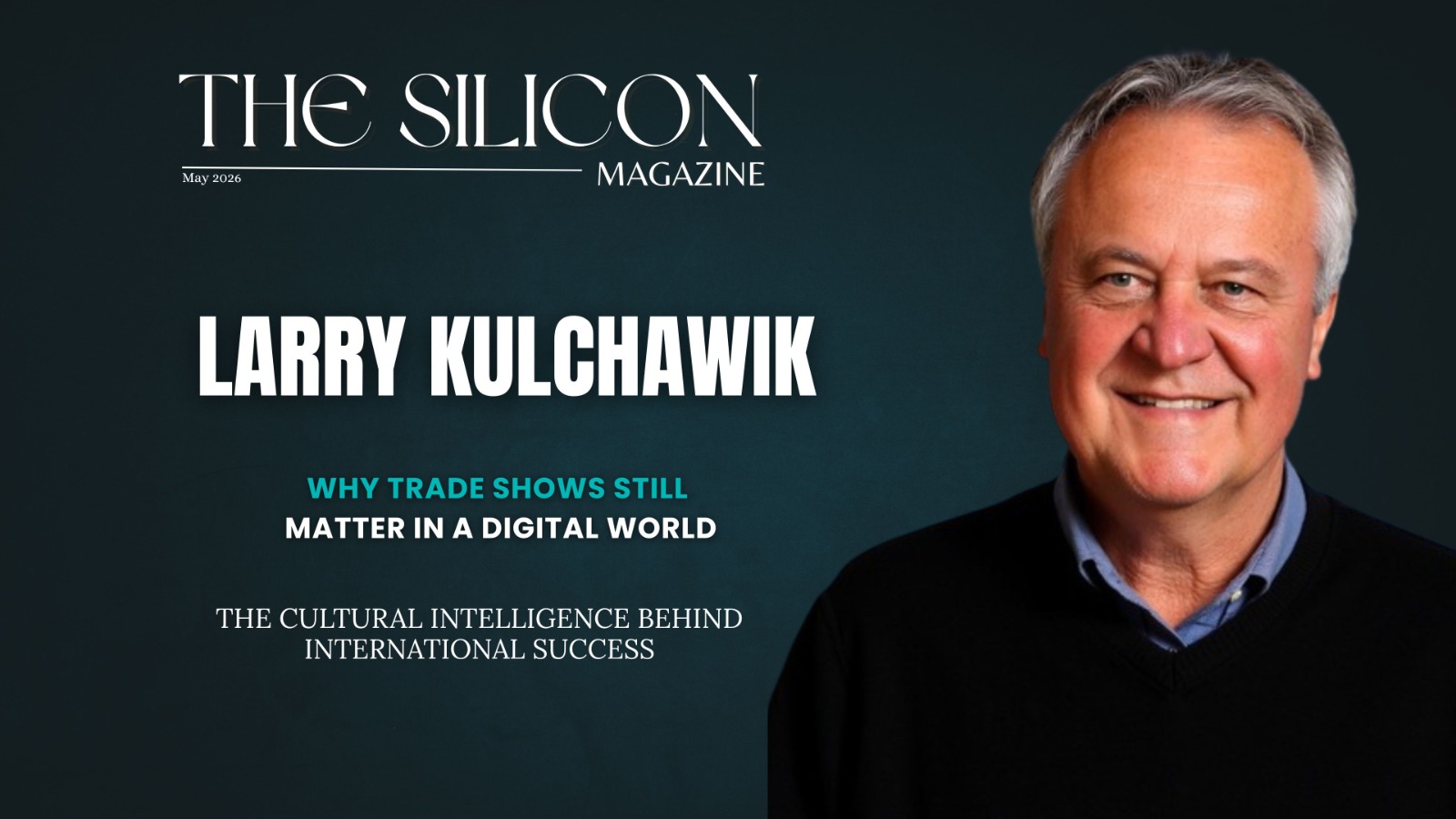
The Invisible Industry: How Trade Shows Quietly Power the Global Economy
An Exclusive Conversation with Larry Kulchawik
Behind every groundbreaking innovation, billion-dollar partnership, and globally recognized brand lies an ecosystem that most people never see. From the unveiling of revolutionary products to the formation of international business relationships, trade shows have long served as the silent engine driving industries forward. Yet despite contributing an estimated $1.6 trillion to the global economy, the meetings and convention remains largely unnoticed by the public.
In an insightful conversation with industry veteran and author Larry Kulchawik, we explored the motivations behind his influential books, Trade Shows from One Country to the Next and The Invisible Industry. Drawing upon more than five decades of hands-on experience in trade show marketing, Kulchawik sheds light on an industry that has shaped international commerce for generations while remaining hidden in plain sight.
The introduction to The Invisible Industry shares the remarkable story of how Steve Jobs introduced Apple to the world at the Personal Computer Festival in Atlantic City in 1976, a moment that demonstrated the extraordinary power of trade shows to launch ideas capable of changing history. From World Fairs to trade shows, inventors have introduced their inventions here to start a wildfire that blazes across a nation.
Today, Kulchawik’s work not only documents the evolution of trade show marketing but also redefines it as one of the world’s most influential yet underappreciated economic forces.
A 50-Year Journey into an Unseen Industry
When asked what inspired him to write Trade Shows from One Country to the Next and The Invisible Industry, Larry Kulchawik reflected on a career spanning more than 50 years in trade show marketing.
According to Kulchawik, the turning point came after discovering a study conducted by the Events Industry Council (EIC) in partnership with Oxford Economics. The report revealed that the meetings, conventions, and trade show industry contributes approximately $1.6 trillion to the global economy.
For Kulchawik, the findings sparked a fundamental question: How could an industry of such enormous economic significance remain so Hidden and little known?
“Most people have no idea how massive this industry really is,” he explained. “Trade shows have quietly shaped industries, created jobs, launched products, and supported economic growth for decades, yet very little of this history has been formally documented.”
Unlike consumer events, most business-to-business trade shows are private and inaccessible to the general public, making the industry largely invisible to outsiders. However, behind every successful event exists an extensive network of organizers, exhibit designers, logistics providers, labor services, convention centers, marketing agencies, and hospitality sectors working together to fuel an economic impact far beyond the exhibition floor.
Upon retirement, Kulchawik collaborated with co-author Bob McGlincy to write The Invisible Industry, a comprehensive historical account of how trade shows evolved in the United States.
The book traces the origins of modern trade shows back to the World Fairs of Europe, where industries first began showcasing innovation to large audiences. Over time, this evolved into a highly specialized business strategy in the United States, with industry associations creating dedicated events to promote their, services, and technological advancements.
As industries expanded, entire ecosystems emerged around exhibitions, including convention centers, trade show contractors, exhibit designers, and event service providers, transforming trade shows into a global business infrastructure.
The Global Evolution of Trade Show Marketing
As global supply chains expanded and international business became increasingly interconnected, trade show marketing evolved into a worldwide phenomenon.
Today, companies across virtually every industry participate in exhibitions to build partnerships, launch products, generate leads, and strengthen their market visibility.
However, according to Kulchawik, many companies underestimate the complexity of exhibiting internationally.
“What works at a trade show in Las Vegas may not work in Dubai, Paris, or Tokyo,” he explained. “Every country has its own business culture, communication style, negotiation approach, and operational regulations.”
This realization inspired his second book, Trade Shows from One Country to the Next, a practical guide designed to help companies successfully navigate international exhibitions across 45 countries.
The core message of the book is simple yet powerful:
“There is no right way or wrong way, there is only a different way.”
Kulchawik emphasizes that companies often make the mistake of assuming their domestic sales strategies will automatically succeed internationally. In reality, successful exhibiting requires cultural awareness, adaptability, and respect for regional differences.
The books input came from exhibit supplier companies from the world, offering firsthand practical guidance on everything from logistics and regulations to communication styles and cultural expectations.
Why Trade Shows Still Matter in a Digital World
In today’s increasingly digital-first economy, many businesses question whether trade shows remain relevant. Kulchawik believes they are more important than ever.
“Digital marketing is a powerful tool, but it cannot replace the power of human connection,” he said.
Trade shows compress months of meetings, negotiations, and relationship-building into just a few days. They provide opportunities for buyers to experience products firsthand, ask direct questions, and establish trust more quickly than through virtual communication alone.
According to Kulchawik, the post-pandemic era accelerated the integration of digital technologies into exhibitions. Smart devices, lead management systems, virtual participation platforms, and audiovisual technologies have transformed how trade shows operate.
However, rather than replacing face-to-face engagement, these digital innovations have strengthened it.
“Technology supports the trade show experience, but it doesn’t replace the emotional connection created by in-person interaction,” he explained.
This shift has also contributed to the rise of experiential marketing, an approach focused on creating memorable and emotionally engaging visitor experiences.
“No other marketing medium creates emotion like a face-to-face meeting,” Kulchawik noted. “Emotion builds trust, and trust encourages business decisions.”
The Cultural Intelligence Behind International Success
One of the most compelling themes throughout Kulchawik’s work is the importance of cultural intelligence in international business.
Every country approaches exhibitions differently. Communication styles, negotiation practices, hospitality expectations, exhibit design preferences, labor regulations, and attendee engagement methods can vary dramatically across regions.
For international exhibitors participating in U.S. trade shows, the differences can be particularly surprising.
“The rules and methods of organizing trade shows in the United States are very different compared to many other countries,” Kulchawik explained.
Failing to understand these differences can lead to costly mistakes, ineffective presentations, and missed opportunities and frustration.
To succeed internationally, Kulchawik advises companies to partner with local experts who understand regional business environments.
“Global partners know the lay of the land better than you ever will,” he said. “Trust their advice.”
This philosophy reflects a broader message embedded throughout both books: global business success requires humility, preparation, and respect for cultural diversity.
The Industry Behind the Curtain
Kulchawik describes trade shows as an “invisible industry” because in part, most people only see the visible outcome, exhibition booths, crowds, and presentations, while overlooking the vast infrastructure operating behind the scenes. Most trade shows are private events, not advertized to the public.
“Trade shows are like an iceberg,” he explained. “Only the top is visible.”
Behind every exhibition lies a sophisticated network of professionals coordinating logistics, transportation, construction, technology, design, catering, security, marketing, and operations.
Together, these professionals create jobs, support local economies, stimulate tourism, and enable international commerce on a massive scale.
The economic impact extends far beyond exhibitors themselves. Host cities benefit from hotel bookings, transportation services, restaurants, tourism spending, labor employment, and venue utilization.
Trade shows do not simply support business growth, they create entire economic ecosystems.
Who Should Read These Books?
Kulchawik believes both books serve as valuable resources for a wide range of professionals.
Business owners, international sales teams, marketing directors, exhibit designers, trade show organizers, marketing students, and entrepreneurs can all benefit from understanding the role exhibitions play in global commerce.
For companies seeking international expansion, Trade Shows from One Country to the Next offers practical insights into how to navigate foreign business environments effectively.
Meanwhile, The Invisible Industry provides a historical and economic perspective on how trade shows evolved into one of the world’s most powerful business platforms.
Kulchawik also highlights a major educational gap within the business world.
“Very few college-level marketing programs spend meaningful time discussing trade show marketing,” he noted.
Despite its enormous economic contribution, the industry remains lacking in formal business education. This is now rapidly changing.
Building Awareness for the Future
At the heart of Kulchawik’s mission is a desire to create greater awareness and recognition for the trade show industry.
He hopes readers leave with a deeper appreciation for the professionals working behind the scenes and for the extraordinary role exhibitions play in shaping industries and economies.
“The people who make this industry work are passionate professionals,” he said. “They don’t seek applause, they simply want recognition that this industry exists and matters.”
Kulchawik also believes trade shows offer exciting career opportunities for future generations.
“Trade shows are not just events,” he emphasized. “They are platforms for innovation, global connection, and economic growth.”
His books additionally include practical tools for exhibitors, including an International RFP Template translated into 13 languages to help companies communicate more effectively with global exhibit suppliers.
The template reflects another key lesson from Kulchawik’s career:
“It’s not just what you say that matters, it’s what you mean.” This guidebook helps you to do that.
The Future of Trade Shows
As industries continue evolving in an increasingly digital world, Kulchawik remains optimistic about the future of trade shows.
While technology will continue transforming event experiences, the fundamental human need for trust, connection, and shared experiences will remain unchanged. We need to mingle! Isolation in an office cube limits the degree emotional contact that is needed to fully engage.
Trade shows will continue serving as powerful platforms for launching innovations, building relationships, and driving economic activity worldwide.
However, Kulchawik stresses that success ultimately depends on delivering measurable value to participating companies.
“A beautiful exhibit may attract attention,” he explained, “but if staff engagement and lead follow-up are poor, the opportunity is wasted.”
For trade shows to remain strong, companies must focus not only on presentation but also on meaningful visitor interaction, relationship-building, and measurable business outcomes.
After more than five decades in the industry, Larry Kulchawik’s message is clear:
Trade shows are no longer invisible.
They are a global economic powerhouse, a driver of innovation, and a vital force connecting industries, businesses, and people around the world.