The Most Inspiring Woman Leading Business in 2026
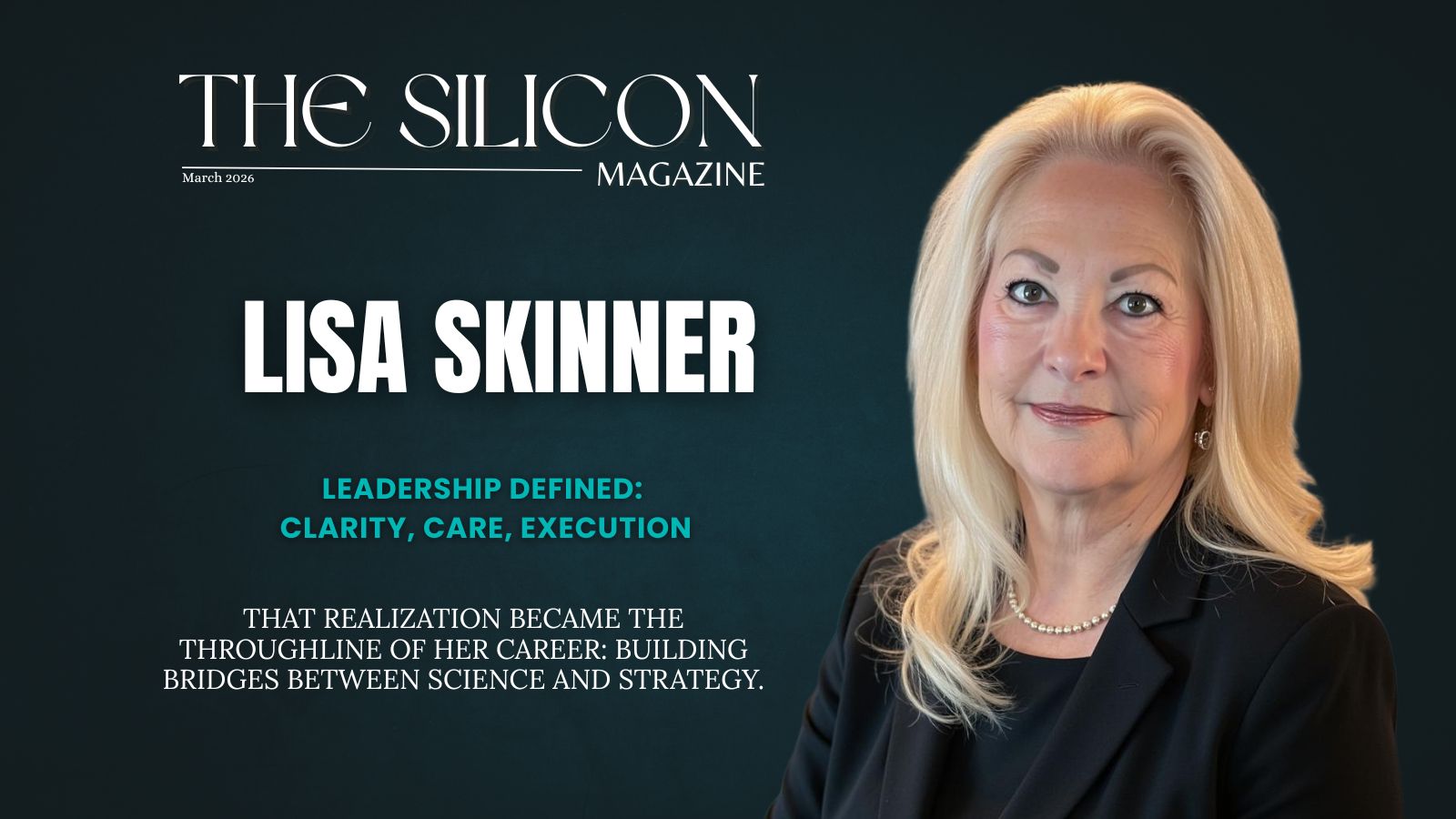
Leading with Purpose in a Fast-Changing World: Lisa Skinner’s Blueprint for Dementia-Aware Leadership
In boardrooms across industries, conversations about productivity, talent retention, and risk management rarely begin with dementia. Yet for millions of families worldwide, cognitive decline is not a distant medical issue it is a daily reality that reshapes careers, households, and entire organizations.
Lisa Skinner, CDP, CDT, CPD, has built her career ensuring that dementia is no longer treated as a private struggle hidden behind professional doors. As Founder and Behavioral Specialist at Minding Dementia, LLC, she has emerged as a pioneering voice in translating dementia science into scalable, humane leadership practices that strengthen both people and performance.
Her story is not only about caregiving. It is about reimagining leadership in a world where longevity, cognitive health, and workforce resilience intersect.
Where Science Meets Service
Lisa Skinner’s professional journey began at the intersection of clinical science and human need. Trained as a dementia-care clinician, she immersed herself in the complexities of cognitive decline studying the biological mechanisms, behavioral manifestations, and emotional toll that dementia places on patients and families.
But early in her career, she noticed a gap.
Breakthroughs in neuroscience and caregiving techniques were advancing steadily. Yet families remained overwhelmed. Care teams were stretched thin. Healthcare systems struggled with fragmentation. And perhaps most overlooked of all, workplaces were largely unprepared to support employees navigating caregiving responsibilities or early cognitive challenges.
Skinner recognized that progress would not come from science alone. It would require translation — turning rigorous research into practical frameworks executives could implement across industries.
That realization became the throughline of her career: building bridges between science and strategy.
Bridging Disciplines, Building Systems
Unlike many specialists who remain within clinical or academic settings, Skinner moved deliberately across disciplines. She worked to ensure that dementia-aware insights could be applied not only in hospitals or long-term care facilities, but in multinational corporations, financial institutions, manufacturing firms, and technology companies developing caregiver tools.
Her approach is grounded in one core belief: caregiving is not a fringe issue. It is a workforce issue.
Millions of employees balance demanding professional roles with caregiving responsibilities. Others face their own cognitive aging concerns. When organizations ignore these realities, they incur hidden costs lost productivity, turnover, institutional knowledge gaps, and reputational risk.
Through Minding Dementia, LLC, Skinner designs programs that integrate caregiving insights into governance, talent strategy, and operations. Her work spans:
Dementia-aware leadership training
Managerial coaching
Caregiver-support infrastructure
Dementia-friendly workplace design
Knowledge-management systems that preserve institutional memory
Her goal is not merely compassion it is resilience.
Daily Motivation: Purpose, Curiosity, Responsibility
Skinner’s leadership is fueled by three driving forces.
Purpose. Dementia affects millions of families worldwide. For working professionals, caregiving often unfolds quietly, accompanied by fear of stigma or career derailment. Skinner is motivated to build workplaces where employees can bring their whole selves to work without sacrificing dignity or opportunity.
Curiosity. Dementia research, caregiving methodologies, and organizational design are evolving rapidly. Skinner commits to continuous learning engaging with neuroscientists, clinicians, HR leaders, and operational strategists. She reads widely, participates in peer forums, and studies behavioral science to remain at the forefront of emerging trends.
Responsibility. The implications of her work extend to every stakeholder: patients, caregivers, employees, shareholders, and communities. Skinner views leadership as an ethical obligation to operate with integrity and measurable impact.
Agility in an Evolving Landscape
In today’s fast-changing business environment, adaptability is non-negotiable.
Skinner’s approach combines structured experimentation with business rigor:
Continuous learning: Staying informed about advances in neuroscience and organizational behavior.
Evidence-informed pilots: Launching small-scale programs with disciplined measurement before scaling.
Cross-functional collaboration: Partnering with HR, IT, facilities, operations, and clinical teams to ensure dementia-aware practices translate into tangible workplace policies.
Data-driven storytelling: Framing caregiving initiatives in terms executives understand risk mitigation, cost control, productivity, talent retention, and customer experience.
By articulating caregiving as a strategic lever rather than a charitable add-on, she secures leadership buy-in and long-term sponsorship.
Innovation Rooted in Psychological Safety
Innovation does not thrive in rigid hierarchies. It flourishes where people feel safe to speak.
Skinner fosters cultures built on psychological safety encouraging frontline teams, caregivers, and support staff to share insights without fear. Often, the most valuable ideas emerge from those closest to the challenge.
Her leadership framework rests on three pillars:
Psychological Safety: Create environments where questioning and experimentation are welcomed.
Structured Autonomy: Provide clear objectives and guardrails, then empower teams to innovate within them.
Narrative as Knowledge: Embed reminiscence-informed onboarding and cross-functional mentoring programs that capture tacit knowledge and preserve cultural continuity.
This last element is particularly powerful in dementia-aware organizations. As employees transition roles or reduce hours due to caregiving, structured knowledge capture ensures institutional memory is not lost.
Leadership Defined: Clarity, Care, Execution
At the heart of Skinner’s philosophy is a deceptively simple equation: clarity plus care plus execution equals sustainable performance.
Clarity: Define goals and expectations plainly. Reduce ambiguity to minimize cognitive load.
Care: Treat every individual with dignity. Compassion is not weakness; it is a performance driver.
Execution: Translate ideas into measurable outcomes improved retention, enhanced employee engagement, better patient or customer experiences, and financial returns.
Her leadership style rejects false dichotomies between empathy and results. In her model, they are mutually reinforcing.
Collaboration as Catalyst
While Skinner’s leadership is visionary, she credits collaboration for transforming ideas into scalable impact.
Her partnerships span:
Academic and clinical institutions: Conducting joint research and translational studies to validate dementia-aware practices.
Industry consortia: Developing standardized leadership training and caregiver tools across companies.
Technology partners: Designing digital toolkits, scheduling platforms, and knowledge repositories that scale globally.
These alliances ensure her frameworks remain evidence-based, practical, and adaptable across sectors.
Lessons from Failure
Skinner’s journey has not been without setbacks. Early initiatives faltered when assumptions were not validated with real-world data.
From these experiences, she distilled critical lessons:
Move from intuition to evidence quickly.
Pilot programs with rigorous measurement from day one.
Focus on scalable systems rather than isolated interventions.
Align caregiving initiatives with core business metrics.
Remain humble and adaptable as new evidence emerges.
Failures, she emphasizes, are data points not verdicts.
Designing the Future of Work
Skinner’s upcoming initiatives reflect an ambitious global agenda.
Global Caregiver Toolkit Rollout: A standardized set of manager guides and decision-support tools to navigate sensitive conversations consistently and fairly.
Dementia-Friendly Environments: Workplace redesign programs incorporating intuitive signage, quiet zones, and processes that reduce cognitive load.
Digital Knowledge Repositories: Centralized archives that preserve institutional memory during transitions or caregiving disruptions.
Research Partnerships: Continued validation of dementia-aware leadership strategies through academic collaboration.
These projects underscore her commitment to systemic change not incremental adjustments.
Rethinking Work-Life Balance
Skinner approaches work-life balance with intention. She sets boundaries around work hours, prioritizes family and personal well-being, and practices deliberate downtime to sustain creativity and resilience.
Her philosophy reflects lived experience: sustainable leadership requires renewal.
A Blueprint for the Future
When asked about legacy, Skinner does not focus on personal accolades. Instead, she hopes to leave behind a durable blueprint practical, evidence-based, and globally adaptable.
She envisions workplaces where caregiving realities are integrated into governance and talent strategy; where cognitive health challenges do not derail careers, where leaders respond with resilience and compassion.
In a world confronting demographic shifts and rising cognitive health concerns, her work feels not only relevant but urgent.
The Larger Message
Lisa Skinner’s success story is not defined by titles alone. It is defined by transformation.
She has demonstrated that dementia-aware leadership is not a niche specialization. It is a strategic imperative. By bridging science and executive decision-making, she equips organizations to respond to one of the most profound challenges of our time with clarity, humanity, and measurable impact.
As industries grapple with workforce evolution, longevity, and rapid change, her message resonates clearly:
Compassion and performance are not opposites.
Science and strategy are not separate silos.
Caregiving and corporate success are not competing priorities.
They are interconnected dimensions of sustainable leadership.
Through Minding Dementia, LLC, Lisa Skinner continues to pioneer a model where organizations respond not only with efficiency, but with empathy building workplaces prepared for the realities of today and the uncertainties of tomorrow.
In doing so, she is not only advancing dementia care.
She is redefining what purposeful leadership looks like in a fast-changing world.